Author Archives: Cecelia Cutler

Talk 5/4/18 — Lauren Squires

Ph.D. / M.A. Program in Linguistics

Sociolinguistics Lunch Lecture Series – Spring 2018

co-sponsored by DSC & GC Digital Initiatives

Genre, Enregisterment, and Ideological Exceptions:

Experimental Investigations

Lauren Squires
The Ohio State University

This talk will discuss an emerging question in the field of sociolinguistic perception and knowledge: What is the role of context in how linguistic features are processed and perceived? More specifically, I have been exploring how genre influences speakers’ interpretation of the language they encounter. I will discuss experiments that test for genre’s ability to shift linguistic expectations, altering both the orientation to a linguistic task and the processing of linguistic input. I use two case studies, both involving features highly enregistered as parts of specific genres: nonstandard grammatical constructions in pop song lyrics, and abbreviations in social media posts.

Friday, May 4, 2018

2 – 4 PM

Room 8301

All are welcome!  Join us in 7400 for refreshments after the talk!


Conference in Finland, Spring 2019

First Call for Papers

COACT Conference 2019

Interaction and discourse in flux: Changing landscapes of everyday life

University of Oulu, Finland, 24-26 April, 2019

This conference explores how changes in society emerge in interactions and discourses. How do these changes influence, and how are they influenced by, participants in various contexts of work and everyday life? We warmly welcome contributions that outline future trends and present new perspectives on interaction and discourse studies. Presentations may investigate the complexity of different settings, data, methods and theories.

We invite papers and posters from different viewpoints, such as:

– Methodologies in flux: developing and combining different methods and materials, covering also big data and thick data

– Research approaches in flux: reconsidering theories, societal impact of research, researchers’ responsibility in engaging in public discourse

– Technologies in flux: relationships and interactions with, via and within ubiquitous technologies

– Participation in flux: examinations of togetherness, encounters and human sociality in different settings; how access and participation may be redefined, e.g., in working life, education and online environments

The theme can be examined from, but is not restricted to, the following research approaches and strategies: action research, activity theory, content analysis, conversation analysis, cultural-historical activity theory, discourse analysis, ethnography, mediated discourse analysis, multimodal interaction analysis, narrative analysis and nexus analysis.

The invited keynote speakers address the conference theme from their respective viewpoints:

Jon Hindmarsh, King’s College London

Rodney Jones, University of Reading

Leena Kuure, University of Oulu

Paul McIlvenny, Aalborg University

The main language of the conference is English, but presentations in other languages are also welcome.

Important dates:

Submission of abstracts: 19 October 2018

Notifications of acceptance: 30 November 2018

Registration will open in January 2019

Deadline for registration and payment: 28 February 2019

Papers and poster presentations:

The abstracts for both papers and poster presentations are limited to 300 words, including references. The time allotted to section papers will be 20 mins + 10 mins. Posters will be presented during a Poster Walk, which consists of short 5-minute talks followed by commentary and a general discussion.

Please submit your abstract and find more information at the conference website: http://www.oulu.fi/coact/conference2019[oulu.fi]

The conference fee is 80 €. The fee includes lunches and coffees.

Contact

Pentti Haddington (pentti.haddington (at) oulu.fi[oulu.fi]) Tiina Keisanen (tiina.keisanen (at) oulu.fi[oulu.fi])

About COACT

The conference is organized by the research community COACT – “Complexity of (inter)action: Towards an understanding of skilled multimodal participation”, based at the University of Oulu, Finland. Research in COACT focuses on how language and multimodal resources feature in the complexity of social action and interaction, and how social participants skillfully manage and organize their conduct at complex sites of learning, work and everyday life. For more information: http://www.oulu.fi/coact/[oulu.fi]

Organising committee: Pentti Haddington (conference chair), Tiina Keisanen (conference chair), Marika Helisten, Antti Kamunen, Annamari Martinviita, Maritta Riekki, Pauliina Siitonen, Maarit Siromaa, Robin Sokol, Anna Suorsa, Riikka Tumelius, Anna Vatanen

Conference sponsors: research projects HANS (Human Activity in Natural Settings) and iTask (Linguistic and embodied features of interactional multitasking), funded by the Academy of Finland

_______________________________________________

The [email protected] mailing list

is provided by the Association of Internet Researchers http://aoir.org[aoir.org]

Subscribe, change options or unsubscribe at: http://listserv.aoir.org/listinfo.cgi/air-l-aoir.org[listserv.aoir.org]

Join the Association of Internet Researchers:

http://www.aoir.org/[aoir.org]

HULLs Conference Schedule

Eighth Annual Hunter Undergraduate Linguistics and Language Studies Conference

Saturday, May 5th 9:30-5:00pm

Hunter West 3rd Floor Glass Cafeteria

Conference Schedule:

9:30 – 10:00 BREAKFAST & COFFEE

Session 1, Communicating Gender

10:00 – 10:20

“Keyboard Smashing, Deciphered: How ‘Queer Twitter’ Communicates Identity in 140 Characters”

Erica Galluscio, Hunter College

10:20 – 10:40

“Outsiders in their Own Tongue: A French Feminist Perspective on Grammatical Gender”

Phoebe Harnish, Juniata College

10:40 – 11:00

“Performing Cuteness: A Study of Gender Dynamics in the Korean Language”

Hai Ri (Sophia) Jeon, New York University

11:00 – 11:20 BREAK

Session 2, Comparative Language Trends

11:20 – 11:40

“‘One Hand Clapping’: Understanding the Linguistic and Cultural Contexts of Kigo in Japanese and English Haiku in Translation”

Kimberly Martinez, Hunter College

12:00 – 12:20

“Sociolinguistic factors affecting tense variation in Singaporean speakers of English”

Wesley Leong, New York University

11:40 – 12:00

“A Comparative look at Alcozauca and Cuautipan Mixteco Deixis”

Jackeline Alvarez, Hunter College

12:20 – 1:20 LUNCH

Session 3, Speech Variation

1:20 – 1:40

“Modified Sinewave Speech and Tone Perception and Identification in Cantonese”

Sarah Feng, Brooklyn College

1:40 – 2:00

“How fo talk place in Hawaiian Creole English”

Harmony Graziano, Columbia University

2:00 – 2:20

“English Vowel Perception in Late Spanish-English Bilinguals”

Daniela Castillo, Queens College

2:20 – 2:40 BREAK

Session 4, Language and the Media: Stories We Tell

2:40 – 3:00

“Western Liberal Imaginaries of Muslim Women in the Opinion Section of the New York Times”

Safia Mahjebin, Hunter College

3:00 – 3:20

“The Art of Language Creation”

Arielle Crisostomo, Brooklyn College

3:20 – 3:40

“Raciolinguistics in the Poetry of Nayyirah Waheed”

Fatima Tariq, Hunter College

3:40 – 4:00 BREAK & SNACKS

                                                            Finale: Keynote

4:00 – 5:00

“Strategies of Anti-Racism: Language, Ideology, Interaction”

                                    Professor Elaine Chun, University of South Carolina


Readings and links suggested by Angie Reyes

Bucholtz, M., & Hall, K. (2004). Language and identity. In A. Duranti (ed.) A Companion to Linguistic Anthropology. Blackwell. https://cloudfront.escholarship.org/dist/prd/content/qt7198t0cr/qt7198t0cr.pdf

Shalini Shankar’s commentary on Dove soap commercial /http://linguisticanthropology.org/blog/2017/10/18/heres-the-rub-on-the-dove-skincare-ad/

Shankar’s book: Advertising Diversity, https://www.dukeupress.edu/Advertising-Diversityhttps://www.dukeupress.edu/Advertising-Diversity

Elaine Chun’s google scholar site: https://scholar.google.com/citations?user=yjXk9OEAAAAJ&hl=en&oi=ao

See also ch. 5 in Reyes and Wortham (2015) Discourse analysis across events (to be posted very soon).

Viral YouTube video: Angela Wallace’s rant on Asian students at UCLA:


Talk: Professor Elaine Chun (USC): “Strategies of Anti-Racism: Language, Ideology, Interaction.”

The Linguistics Association is excited to announce that the 8th Annual Hunter Undergraduate Linguistics and Language Studies Conference is scheduled to take place on
Saturday, May 5th from 9:30-5pm in the HW Glass Cafeteria,
and will feature keynote Professor Elaine Chun (USC): “Strategies of Anti-Racism: Language, Ideology, Interaction.”

On crying racist

I just reviewed a piece for the Journal of Linguistic Anthropology on a similar topic (title:  Colorblind along the Color line: Racialized fractals, recursive oppositions, and control of meaning in developmental spaces)

The article posits that white students often police race talk in their alignments with the ideology of “colorblindness”.

The author writes that the ideology of “colorblindness” interprets explicit mention of race in addition to the more obvious racial slurs or White supremacist discourse, as racist and makes any discussion of race off-limits. The consequence is that white students are quick to label any transgression of this unspoken rule “racist” and to position such comments as an unwarranted preoccupation with race on behalf of people of color.

The author argues that racialized differentiation is recursively produced by these pre-adolescents, who are being socialized to reproduce the ideologies of colorblind racism and White privilege that dominate society and shape the lives of the actors within it – ensuring the position of White at the top and Color at the bottom.

In regards to your 2011 paper, would you talk a bit about your fieldwork?

Jane Hill who writes that “The theme of race is both everywhere and nowhere, consisting largely of silences, of the failure to be specifically anti-racist, of careful failure to notice racially-shaped phenomena” (Hill 2008, 47).

Your work suggests that it’s more than silence: students actively police – even if it’s in humorous ways – even unrelated mentions of the color term “black”. Is this policing of the ideology of colorblindness a way to suppress race talk or to provoke conversations about it?

Is “crying racist” a plea by students to talk about race because so many teachers don’t want to?

How can this kind of research reach teachers and be applied to their training? To what extent do you see that as part of your role as a researcher?

Regarding the methodology chapter, would you explain Silverstein’s metapgramatic regimentation? How can language regiment its own pragmatics? What is the difference between denotationally implicit and explicit metapragmatics? (p. 460).

Doing discourse analysis across events is potentially relevant to the work several students in this class are engaged in that involve processes like learning, identity formation, and socialization. To what extent is your analysis based on a single event (a within event analysis) or across events?

I challenge each of you to reflect on how you plan to incorporate context beyond the speech event itself and what discreet events and “cross event pathways” each of you could potentially analyze?

Sara’s work on translanguaging practices in computer science lessons;

Carmín’s study of the reactions of readers to the appointment of a female police superintendent and the ensuing debates over whether to use the -e or -a morphological gender marker for her title;

Kelsey’s study of language ideologies in an adult second language program,

Marcos’ study of sharing of political video content on social media, Ekaterina’s examination of constructions of community in Stuytown on Twitter

Andy’s examination of a Colombian-based internet forum visited and maintained by male clients of male-to-female transgender sex workers

Angie Waller’s analysis of Facebook founder and CEO Mark Zuckerberg responds to public outcry around  privacy breaches using prophetic ethos to redirect discourse to the ambitious mission of his social media platform

Anthony’s study of religious indoctrination through radio shows for women under Franco in Spain,

Ariel’s work on cross-racial adoption and how parents navigate racial difference

Angie Pickens’ work on representations of the ongoing Oklahoma teachers’ strike looking teachers’ picket signs, public comments by legislators, and a Facebook group

Class visit: Angie Reyes

Angela Reyes, Hunter College (English Dept.) and the Graduate Center (Anthropology), will be our class visitor on April 16th. The readings include a methodological piece about how to do discourse analysis across different events from the perspective of linguistic anthropology and another piece about the regimentation of racist discourse. In preparation for her talk, please post 1-2 questions about each article below. Please formulate your questions in narrative form and reference specific examples or phrases from the texts.

Bio

Angela Reyes (Ph.D. University of Pennsylvania, 2003) is Professor in the Department of English at Hunter College, City University of New York (CUNY), and Doctoral Faculty in the Program in Anthropology at The Graduate Center, CUNY. She teaches courses on English linguistic structures and histories, discourse theory and analysis, linguistic anthropology, and language in relation to notions of race, mixedness, and postcoloniality. She is a Faculty Advisory Board Member of the Asian American Studies Program and Mellon-Mays Undergraduate Fellowship Program at Hunter College, and Research Associate at the Research Institute for the Study of Language in Urban Society in the Program in Linguistics at The Graduate Center. She is Associate Editor for Linguistic Anthropology of American Anthropologist.

Reyes works on theories of semiotics, discourse, racialization, and postcoloniality. Combining ethnographic fieldwork and discourse analysis, her research examines how ideologies of language and race are formulated through spatiotemporal scales of communicative context in both the U.S. and the Philippines. She has conducted three main ethnographic studies: a four-year study of Southeast Asian American teenagers in an after-school videomaking project at an Asian American community arts organization in Philadelphia; a one-year study of Korean American fifth graders in an Asian American “cram school” in New York City; and a two-year study of Filipino college students and professors at a private university in Manila, Philippines. In this most recent work in the Philippines, Reyes examines conceptions of mixed race/language that link an elite social figure (a type of privileged mestizo youth called conyo) to an elite linguistic register (a form of Tagalog-English speech called conyo). She examines how anxieties about nation, modernity, race, and language are traceable through the circulation of the conyo figure/register on college campuses and across new media sites. She is also in the preliminary stages of researching Riot Grrrl punk feminist zine archives from the early 1990s.

Reyes is the recipient of numerous fellowships, including the Advanced Research Collaborative Distinguished Fellowship (2016), National Academy of Education/Spencer Foundation Postdoctoral Fellowship (2009-2010), Andrew W. Mellon Foundation/Woodrow Wilson National Fellowship Foundation Career Enhancement Fellowship for Junior Faculty (2006-2007), and National Research Council/Ford Foundation Dissertation Fellowship for Minorities (2002-2003).

Selected publications:


Reyes, Angela (2017a) Inventing postcolonial elites: Race, language, mix, excessJournal of Linguistic Anthropology 27(2): 210-231.

Reyes, Angela (2017b) Ontology of fake: Discerning the Philippine eliteSigns and Society 5(S1): 100-127.

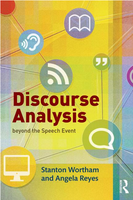
Wortham, Stanton and Angela Reyes (2015) Discourse Analysis Beyond the Speech Event. New York: Routledge. *Awarded the Edward Sapir Book Prize, Society for Linguistic Anthropology.

Reyes, Angela (2014) Linguistic anthropology in 2013: Super-New-BigAmerican Anthropologist 116(2): 366-378.

Reyes, Angela (2013) Corporations are people: Emblematic scales of brand personification among Asian American youthLanguage in Society 42(2): 163-185.

Reyes, Angela (2011) “Racist!”: Metapragmatic regimentation of racist discourse by Asian American youth. Discourse and Society 22(4): 458-473.

Alim, H. Samy and Angela Reyes (2011) Complicating race: Articulating race across multiple social dimensionsDiscourse and Society 22(4): 379-384.

Reyes, Angela and Adrienne Lo (eds) (2009) Beyond Yellow English: Toward a Linguistic Anthropology of Asian Pacific America. New York: Oxford University Press.

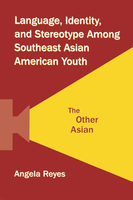
Reyes, Angela (2007) Language, Identity, and Stereotype Among Southeast Asian American Youth: The Other Asian. Mahwah, NJ: Lawrence Erlbaum.

Reyes, Angela (2005) Appropriation of African American slang by Asian American youthJournal of Sociolinguistics 9(4): 509-532.

Reyes, Angela (2004) Asian American stereotypes as circulating resourcePragmatics 14(2/3): 115-125.

Reyes, Angela (2002) “Are you losing your culture?”: Poetics, indexicality, and Asian American identityDiscourse Studies 4(2): 183-199.

Talk: Bodies That Touch and Walk: Some Notes on Gender and Multimodality in Drag King Workshops

Ph.D. / M.A. Program in Linguistics
Sociolinguistics Lunch Lecture Series – Spring 2018


Bodies That Touch and Walk:
Some Notes on Gender and Multimodality
in Drag King Workshops


Luca Greco
University Paris III Sorbonne Nouvelle
 
Based on an ethnography conducted on drag king workshops in Brussels (Belgium) on multimodal construction of queer masculinities in interaction, this presentation will deal with the constitutive role played by touch and walk in the construction and the deconstruction of gender in bodily transformation practices.
 
Drag kings are generally female assigned persons who embody a male character in pursuing a personal desire to explore gender(s), for the sake of performance, and within a political agenda against the binary dimension of gender. Drag king workshops are social occasions in which novices transform their bodies with the help of leaders (particularly those knowledgeable in bodily transformation practices), through the mobilization of specific tactile practices in make-up activities, and through some exercises in which they experiment how to walk in gendered and innovative ways. 
 
My analysis focuses on these two aspects of drag king workshops. It is situated in gender studies inspired by queer and new materialisms perspectives (Butler 1993, Alamo & Hekman 2008, Barad 2012) and in the field of multimodality inspired by the works of Charles and Marjorie Goodwin (2017, 2006). This study aims to show the haptic and mobile dimensions of gender, traditionally neglected in gender and queer studies. Moreover, it proposes to consider multimodal practices as political and artistic ones as they are indexing new ways to consider bodies and genders through the lens of imagination, creativity and improvisation and as they are marked by the bodily experiences of subjects.
 
 
Date: Friday, April 13, 2018    
Time: 2:00 – 4:00 PM                Room: 9207
 

Populist discourse (by Angie Pickens)

Before discussing populist discourse, it is essential to differentiate between the terms “populist” and “popular.” In the U.S., the word “populist” is often used to describe a politician or political movement with mass appeal. However, that is not the definition of populism.

Populism is not just a matter of having mass appeal, and it is not just a matter of discourse. It can have serious real-world consequences such as Trump’s Muslim ban, racist deportations, class collaboration, genocide, and beyond. Because of the destructive real-world effects of populism, it is impossible to discuss populist discourse without also taking those real-world effects into account.

Populism as a stand-alone ideology, like other harmful ideologies that incorporate racism, sexism, xenophobia, and the like, becomes dangerous when it is set against the backdrop of a crisis situation like the one some people are facing today. Low wages; insufficient healthcare, childcare, and education; and escalating imperialist war are all real-world issues that contribute to feelings of outrage and disenfranchisement, and the desire to do something about these issues. In historical moments such as these, there is often (but not always) a correct understanding that something’s wrong but a misattribution of the cause of these problems, and thus, a miscalculation of what the solution should be.

Of course, there are many examples of the sinister effect of populism (Nazi Germany is probably the most famous example), and the defeat of class struggle or the perpetuation of exploitation through means other than discourse. One clear, specific example of this, though, is unemployment in the Rust Belt. 

It is certainly a problem that white working-class men such as auto workers in Cleveland, Detroit, and elsewhere are losing their jobs to manufacturers outsourcing factory jobs overseas. However, the blame is placed on the Mexican workers who take these jobs for a fraction of the wages paid in the U.S. The solution is to keep “American jobs in American hands,” even going so far as to believe that immigrants (especially those from Latin American countries) are coming into the U.S. to “steal American jobs.” In this example, while the problem of growing unemployment (or shrinking wages and benefits) is correctly identified, the cause of that problem – capital cutting costs by exploiting workers abroad – is instead attributed to “foreigners stealing their jobs.” Outrage that should be directed against the capitalists who are directly responsible is instead rerouted towards individuals of the same class (and thus with more similar interests) as the disenfranchised workers through populist rhetoric. This is some of the rhetoric Donald Trump feeds off of.

Under similar conditions, left-wing populists such as Bernie Sanders can also come to the fore, making all sorts of promises to improve living conditions (which may be true temporarily, or until there is the next rightward swing) or make the country more democratic (without explaining what sort of “democracy” they would like). These promises are often unrealistic or pandering to a certain demographic, and encourage illusions in reformist politics rather than class-based politics. In this way, both left- and right-wing populists reroute nascent movements of class struggle back into participation in electoral politics and even (in our situation now) semi-fascistic mobilizations, thus stymying any chance of actual positive social change and in fact driving political consciousness farther to the right and creating dangerous conditions for immigrants, Muslims, people of color, and women alike.

Questions for Eric Chambers

Eric Chambers’ dissertation work analyzes a gay men’s message board dedicated to the practice of gay male erotic hypnosis and BDSM. Participants join the message board in order to enter a relationship with a “coach”, get “tranced” so as to become a “dumb jock”. The coach is a “dominant” in BDSM parlance and the jock is the “submissive.” Eric’s work explores how these men enact their new found “dumb jock” selves through a set of non-standard orthographic and syntactic practices. He analyzes his data using (inter alia) Critical Discourse Analytic methods, (Fairclough 2012), focusing on the micro, meso, and macro levels.

Please post 1-2 questions for Eric here.