Category Archives: Student Blog Post

Classroom Discourse

Classrooms, for me, are often little sparks of optimism that get lost in the despair and division that haunt many people today. While I resist discourses that treat education as the solution to all of our problems, I do believe that schools are essential to changing social dynamics and creating a more informed and empathetic society. Since many young people spend more time at school than at home, teachers play an important role not only in the process of learning content like literature and science, but are also crucial to the sentimental and moral education of young people, which I consider just as important (if not more important) than learning to add and subtract fractions.

The articles we’ve read this week engage in this role of teachers in a variety of ways through classroom discourse, using analytical tools of discourse analysis to reveal underlying process of distinction within the classroom. García-Sánchez’s (2016) piece is particularly telling in this regard. She shows the ways in which methods of inclusion and participation can, in fact, produce exactly the opposite effect, albeit unintentional (306). In the Spanish classroom she researches, she finds that Moroccan and Roma students are marked as the outsiders through a process of tokenization and hybridity erasure (293). Betsy Rymes (2016) explains how classroom discourses are sections of, and in part controlled by, larger social contexts and that critical reflection and individual agency are potential methods to tinker with the machinery of discourse (49). Rymes advocates for a repertoire approach to work towards denaturalizing the relationship between perceived identity categories and intellectual competence. In Pedagogy of the Oppressed (1968), Freire provides us with ways to develop critical methodologies to work towards combatting these naturalized sociopolitical dynamics.

To be critical of these critical approaches, I am not particularly convinced that simply adopting a repertoire approach will challenge deeply engrained ideologies of race, gender, class, and their relationship to educational competence. This is one aspect of a process that requires a long, difficult, intentional, and sometimes painful process of reflection, reading, and discussion, which relies on two aspects of life that most teachers do not have: time and resources. While I agree with the intent of the article and believe in its potential to make educators more aware of how they can reproduce established and naturalized inequalities, I question its effectiveness because of its idealization of the reality of teachers’ lives and schedules. Like many attempts for education reform, the implementation becomes unfeasible due to complete lack of attention to the resources required for something like these approaches to work. Furthermore, it seems important to be wary of the power we place on language; as we’ve seen in Rosa & Flores’ (2017) work, language use is simply one aspect of a larger process of construction of social inequalities. Like education, language cannot be, and we shouldn’t think of it as, the solution to all of our problems; rather, we need to always keep in mind the historical and colonial constructions of the language use that reproduces marginalizing discourses.

Classroom Discourse Analysis

What kind of student were you in school? The “quiet one?” The “know-it-all?” The “bad kid?”

Many people who devote themselves to education believe that all children are unique individuals, and hope that schooling helps each one realize his/her/their full potential. At the same time, the highly-structured nature of traditional schooling (what Freire (2000) called “banking education”) expects conformity to standards, and a key product of that type of schooling is a host of labels for those who don’t “fit” — “English Language Learner,” “Student with Interrupted Formal Education,” “At Risk.” These labels can endure long after a student leaves school, shaping their sense-of-self and identities long after they leave school.

Betsy Rymes’ book, Classroom Discourse Analysis, spells out a framework for analyzing classroom talk and discourse, in recognition of the ways that the language used by students and teachers can both heighten normative expectations for student identities and subjectivities in classrooms, and subvert them. While her book might be of interest to educational researchers, Rymes’ audience for this book is primarily teachers. She argues that if teachers pay special attention to how they and their students’ language use is shaped by (1) social context in and out of the classroom, (2) interactional contexts (e.g. how teachers pose questions, how they listen and facilitate dialogue), and (3) the ways they and their students exercise agency, they stand a better chance at understanding the totality of their students’ communicative repertoires, rather than making snap judgments about what “kind of” student someone is based on a superficial read of a student at one moment in time. Rymes argues that through this approach to analysis, teachers might promote learning, given that “classroom talk and interaction… give voice to a wide range of communication, augmenting the repertoires of everyone in the room. In this way, a classroom develops as a learning community not by eliminating elements from children’s repertoires but by developing overlap and building common ground” (Rymes, 2016, p. 20).

I’ve found Rymes’ framework to be a useful took for reflecting on classroom discourse in one of the middle school classrooms where I do my field work. In this site, there are a couple of boys who have been positioned at the margins of the classroom. A teacher’s first impulse might be to view all of those ways these students don’t fit the norm: They are older than your average 7th graders, have “low literacy,” are consistently sent to the principal’s office, are often present for just a few minutes of the class period, and use their phones or engage in side conversations. Rymes’ discourse analysis framework would encourage teachers to go beyond these momentary impressions to take a multi-level view — considering how various factors about the students (their ages, race, gender) might shape how their discourse practices (which include their speech, but also other ways they communicate — their clothing, they postures, etc) get interpreted by teachers and administrators at the school. Teachers might take a closer look at the kinds of questions they ask these students, the ways they expect them to engage, and provide more opportunities for student voice and agency. Once teachers complete this analysis, Rymes’ work advises teachers to focus on what they can control — their reactions and responses to students, how they “make the weather” in their classroom.

This is an empowering stance for a teacher. At the same time, there are a myriad of structural factors that contribute to why some students are / are positioned as disconnected from formal schooling, and discourse analysis can’t solve all of those issues. Taking a page from Freire’s book, it is my hope that if greater attention is paid to critical analysis of classroom discourse, teachers and students might be prompted to take action to shift the oppressive systems around them.

Freire, Paulo, Bergman Ramos, Myra, & Macedo, Donaldo. (2000). Pedagogy of the Oppressed, 30th Anniversary Edition: New York: Bloomsbury Academic.
Rymes, B. (2015). Classroom Discourse Analysis: A Tool For Critical Reflection, Second Edition (2 edition). New York, NY: Routledge.

Marco’s Post on Raciolinguistics

For some reason, Marco didn’t have permissions to post on our group site, so I’m posting on his behalf.

From Marco:

Raciolinguistics and I

This week we were tasked to look over White Racist Discourse in the U.S. — exploring Hill’s work on Mock Spanish, described as covert discursive practices used by Whites that may indicate a jocular stance and/or perpetuate negative stereotypes about “Spanish-speaking” populations (Hill, 2008). Rosa’s approach refutes Hill’s proposal on Mock Spanish by arguing that these linguistic practices are synonymous with race instead of analyzing the language just part of what constitutes an ethnoracial identity through the paradigm of Raciolinguistics. Being a heritage speaker myself, I have to agree.

I was born and raised in New York, a first generation child of Dominican parents and a heritage speaker of Spanish (which was spoken in the household) and otherwise English in the academic setting. If we go by the context of a “prestige dialect” and it being identifiable within the United States, try as I must to assimilate or become the ideal speaker of this dialect, racialization via my ethnic features will always prevail. I would be a Hispanic first, and an American second.

My mother comes from a small town in the Dominican Republic, Santiago Rodriguez. In my adolescence I would frequently visit with her to unite with relatives, friends, and embrace my native culture. Although the experiences were far from negative, I was never truly considered Dominican amongst my own family, friends, or the people in general. Other instances of racialization, but in this scenario, it was largely linguistic. “I did not sound like a Dominican” was the popular notion. My prosodic features, with a blend of my L1 and L2, deviated from what is the norm with Dominicans..and thus, I was American. Would this be able to change with time and effort?

During my time as an ESL teacher in Pan American International High School — the question of how I identify was quite popular among my students. They were overly curious as to, me being born and raised in the United States as a child of Dominican parents — how would I identify myself given the cultures made up a large part of who I am. My students, hailing from areas where it was primarily linguistic ideologies that defined a large part of who you were, I felt deserved that answer. I explained that I identified with both being American and Dominican, questions about the authenticity of the former brought up  plenty of healthy debates which, I hope would help with their own ongoing constructions as immigrants to the United States.

When it comes to my own identity, as I’m sure it is the case with many other first generation Latinx — how I identify has always been in a sort of limbo. I am well aware I do not fit the standard description of an American, but I am. My linguistic features neither allow be to become truly Dominican either, but I also am. So I embrace the hybridity proudly, with definitions as to how I label myself being anything but static.

Ultimately, these experiences are examples of Raciolinguistic dynamics at play. Within the United States, my linguistic practices have little to no effect on my racial identity, for it will always be a constant factor regardless of dialectal preferences — my racial identity IS what I am. In the Dominican Republic (and to a larger extent the Latinx population), linguistic ideologies help shape a racial identities.

References:

Hill, J. H. (2008). The everyday language of white racism. Chichester: Wiley-Blackwell.

Alim, H. S., Rickford, J. R., & Ball, A. F. (2016). Raciolinguistics: How language shapes our ideas about race. New York, NY: Oxford University Press.


Racialization and Language

While I really appreciate Jane Hill’s work – especially the way her focus on linguistic practices adds nuance to the ‘structural racism versus personal bigotry’ dichotomy – I was somewhat troubled by her uncritical use of social categories, and therefore thought that Rosa’s critique was a helpful move forward. By incorporating race into his analysis and looking beyond Hill’s original focus on “historically Spanish-speaking populations”, Rosa shows how Mock Spanish itself has racializing effects, re-inscribing and further articulating the distinction between ‘White’ and ‘Latina/o’ (Rosa 2016, 69, quoting Hill 1998).

In this way, Rosa reminds us that we can’t take racial categories for granted, but he stops short of making the same claim about linguistic categories. Both Hill and Rosa (unreflexively) use named language categories, naturalizing arbitrary boundaries that themselves are products of racializing discourses. Particular words or pronunciations are labeled as Spanish or English, though they seem to be available to a wide range of people, regardless of racial status or so-called language dominance. This is standard practice in linguistic/sociolinguistic/linguistic anthropology research, but it weakens Rosa’s argument. This is most obvious when he describes Inverted Spanglish as “saying Spanish words in English”, which simultaneously emphasizes and blurs boundaries between languages, creating an ambivalence that hides the relationship between race and language that Rosa is trying to expose (74). But I am inspired by Rosa’s insistence on denaturalizing racial categories and think the same can be done with language. As Rosa reminds us, “language ideologies need not correspond to actual linguistic practices”, so ‘language’ cannot remain a stable variable in our analyses (69).

The ‘constructed-ness’ of named languages shines through in the nuanced and transgressive language play the students at NNHS engage in. These students defy linguistic boundaries, combining and layering supposedly disparate ‘languages’ and ‘varieties’ to articulate complex identities. But if we’re trying not to treat ‘language’ as a static entity, how can we understand what they’re doing? I think the concept of indexicality, which we discussed in class in relation to ‘crying racist’, can be of use. Indexicality helps us think of practices like Mock Spanish or Inverted Spanglish not as speaking one language or another, but as using forms/features that index certain identities and qualities. This reframes linguistic practice as a recursive process in which we draw on existing categories (including racial categories) but also further articulate/re-define/play with those categories.

Indexicality seems particularly relevant in an analysis of Mock Spanish and Inverted Spanglish in that they both involve some sort of ‘double indexicality’. Maybe there’s a real term for that, but what I mean is that linguistic forms are taken up and then modified to create new forms (but not so much that the original is unrecognizable) to establish a certain stance towards the originally indexed meaning and as this usage is enregistered, another level of indexical meaning is added (Agha 2005). How can such complexity be captured if we’re stuck with labels like ‘English’ and ‘Spanish’?

With these ideas in mind, I’m moved to destabilize the language categories I’ve been using in my own project. So far, I’ve been thinking about how different languages and varieties are incorporated (or not) in adult ESL, but how can I insist on the fluidity of ‘English’ if I’m treating languages as delimited entities? Instead, I’m thinking that I need to refocus my project on how ‘English’ is constructed in these spaces, paying attention to which practices are emphasized, which are excluded, and which are simply ignored, and how indexicality can help explain these moves.

What about you? Does denaturalizing social categories (like race and language) have any consequences for your work? Does it offer any new insights? Does it change your research questions?


References:

Agha, A. (2005). Voice, footing. Enregisterment. Journal of Linguistic Anthropology. 15(1): 38-59.

Rosa, J. (2016). From mock Spanish to inverted Spanish: Language ideologies and the racialization of Mexican and Puerto Rican youth in the United States. Racio-linguistics: How language shapes our ideas about race, 65-80.

On crying racist

I just reviewed a piece for the Journal of Linguistic Anthropology on a similar topic (title:  Colorblind along the Color line: Racialized fractals, recursive oppositions, and control of meaning in developmental spaces)

The article posits that white students often police race talk in their alignments with the ideology of “colorblindness”.

The author writes that the ideology of “colorblindness” interprets explicit mention of race in addition to the more obvious racial slurs or White supremacist discourse, as racist and makes any discussion of race off-limits. The consequence is that white students are quick to label any transgression of this unspoken rule “racist” and to position such comments as an unwarranted preoccupation with race on behalf of people of color.

The author argues that racialized differentiation is recursively produced by these pre-adolescents, who are being socialized to reproduce the ideologies of colorblind racism and White privilege that dominate society and shape the lives of the actors within it – ensuring the position of White at the top and Color at the bottom.

In regards to your 2011 paper, would you talk a bit about your fieldwork?

Jane Hill who writes that “The theme of race is both everywhere and nowhere, consisting largely of silences, of the failure to be specifically anti-racist, of careful failure to notice racially-shaped phenomena” (Hill 2008, 47).

Your work suggests that it’s more than silence: students actively police – even if it’s in humorous ways – even unrelated mentions of the color term “black”. Is this policing of the ideology of colorblindness a way to suppress race talk or to provoke conversations about it?

Is “crying racist” a plea by students to talk about race because so many teachers don’t want to?

How can this kind of research reach teachers and be applied to their training? To what extent do you see that as part of your role as a researcher?

Regarding the methodology chapter, would you explain Silverstein’s metapgramatic regimentation? How can language regiment its own pragmatics? What is the difference between denotationally implicit and explicit metapragmatics? (p. 460).

Doing discourse analysis across events is potentially relevant to the work several students in this class are engaged in that involve processes like learning, identity formation, and socialization. To what extent is your analysis based on a single event (a within event analysis) or across events?

I challenge each of you to reflect on how you plan to incorporate context beyond the speech event itself and what discreet events and “cross event pathways” each of you could potentially analyze?

Sara’s work on translanguaging practices in computer science lessons;

Carmín’s study of the reactions of readers to the appointment of a female police superintendent and the ensuing debates over whether to use the -e or -a morphological gender marker for her title;

Kelsey’s study of language ideologies in an adult second language program,

Marcos’ study of sharing of political video content on social media, Ekaterina’s examination of constructions of community in Stuytown on Twitter

Andy’s examination of a Colombian-based internet forum visited and maintained by male clients of male-to-female transgender sex workers

Angie Waller’s analysis of Facebook founder and CEO Mark Zuckerberg responds to public outcry around  privacy breaches using prophetic ethos to redirect discourse to the ambitious mission of his social media platform

Anthony’s study of religious indoctrination through radio shows for women under Franco in Spain,

Ariel’s work on cross-racial adoption and how parents navigate racial difference

Angie Pickens’ work on representations of the ongoing Oklahoma teachers’ strike looking teachers’ picket signs, public comments by legislators, and a Facebook group

Class visit: Angie Reyes

Angela Reyes, Hunter College (English Dept.) and the Graduate Center (Anthropology), will be our class visitor on April 16th. The readings include a methodological piece about how to do discourse analysis across different events from the perspective of linguistic anthropology and another piece about the regimentation of racist discourse. In preparation for her talk, please post 1-2 questions about each article below. Please formulate your questions in narrative form and reference specific examples or phrases from the texts.

Bio

Angela Reyes (Ph.D. University of Pennsylvania, 2003) is Professor in the Department of English at Hunter College, City University of New York (CUNY), and Doctoral Faculty in the Program in Anthropology at The Graduate Center, CUNY. She teaches courses on English linguistic structures and histories, discourse theory and analysis, linguistic anthropology, and language in relation to notions of race, mixedness, and postcoloniality. She is a Faculty Advisory Board Member of the Asian American Studies Program and Mellon-Mays Undergraduate Fellowship Program at Hunter College, and Research Associate at the Research Institute for the Study of Language in Urban Society in the Program in Linguistics at The Graduate Center. She is Associate Editor for Linguistic Anthropology of American Anthropologist.

Reyes works on theories of semiotics, discourse, racialization, and postcoloniality. Combining ethnographic fieldwork and discourse analysis, her research examines how ideologies of language and race are formulated through spatiotemporal scales of communicative context in both the U.S. and the Philippines. She has conducted three main ethnographic studies: a four-year study of Southeast Asian American teenagers in an after-school videomaking project at an Asian American community arts organization in Philadelphia; a one-year study of Korean American fifth graders in an Asian American “cram school” in New York City; and a two-year study of Filipino college students and professors at a private university in Manila, Philippines. In this most recent work in the Philippines, Reyes examines conceptions of mixed race/language that link an elite social figure (a type of privileged mestizo youth called conyo) to an elite linguistic register (a form of Tagalog-English speech called conyo). She examines how anxieties about nation, modernity, race, and language are traceable through the circulation of the conyo figure/register on college campuses and across new media sites. She is also in the preliminary stages of researching Riot Grrrl punk feminist zine archives from the early 1990s.

Reyes is the recipient of numerous fellowships, including the Advanced Research Collaborative Distinguished Fellowship (2016), National Academy of Education/Spencer Foundation Postdoctoral Fellowship (2009-2010), Andrew W. Mellon Foundation/Woodrow Wilson National Fellowship Foundation Career Enhancement Fellowship for Junior Faculty (2006-2007), and National Research Council/Ford Foundation Dissertation Fellowship for Minorities (2002-2003).

Selected publications:


Reyes, Angela (2017a) Inventing postcolonial elites: Race, language, mix, excessJournal of Linguistic Anthropology 27(2): 210-231.

Reyes, Angela (2017b) Ontology of fake: Discerning the Philippine eliteSigns and Society 5(S1): 100-127.

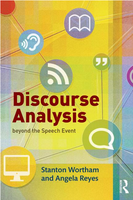
Wortham, Stanton and Angela Reyes (2015) Discourse Analysis Beyond the Speech Event. New York: Routledge. *Awarded the Edward Sapir Book Prize, Society for Linguistic Anthropology.

Reyes, Angela (2014) Linguistic anthropology in 2013: Super-New-BigAmerican Anthropologist 116(2): 366-378.

Reyes, Angela (2013) Corporations are people: Emblematic scales of brand personification among Asian American youthLanguage in Society 42(2): 163-185.

Reyes, Angela (2011) “Racist!”: Metapragmatic regimentation of racist discourse by Asian American youth. Discourse and Society 22(4): 458-473.

Alim, H. Samy and Angela Reyes (2011) Complicating race: Articulating race across multiple social dimensionsDiscourse and Society 22(4): 379-384.

Reyes, Angela and Adrienne Lo (eds) (2009) Beyond Yellow English: Toward a Linguistic Anthropology of Asian Pacific America. New York: Oxford University Press.

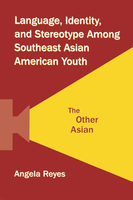
Reyes, Angela (2007) Language, Identity, and Stereotype Among Southeast Asian American Youth: The Other Asian. Mahwah, NJ: Lawrence Erlbaum.

Reyes, Angela (2005) Appropriation of African American slang by Asian American youthJournal of Sociolinguistics 9(4): 509-532.

Reyes, Angela (2004) Asian American stereotypes as circulating resourcePragmatics 14(2/3): 115-125.

Reyes, Angela (2002) “Are you losing your culture?”: Poetics, indexicality, and Asian American identityDiscourse Studies 4(2): 183-199.

The Invisible Third Party in Computer Mediated Discourse

Susan Herring and Jannis Androutsopoulos’s chapter on Computer Mediated Discourse 2.0 outlines approaches that consider the temporal, multi-modal and situational contexts to consider in CMD. The examples in the chapter treat the computer platform as a neutral conduit of information where variation in content and timing of interactions are determined by the user. While I agree most formats of computer mediated discourse closely follow non-digital precedents, there are factors in the design and algorithmic makeup of platforms like Facebook and Twitter that present a new layer of influence and context that is difficult to document.

The most controversial study of the influence of platforms over discourse was by Facebook themselves. In 2012, their “Emotional Contagion” study selected 700,000 random, non-consenting users and divided them into four groups: a group whose newsfeed blocked posts with negative words (i.e. “sad”), a group whose newsfeed blocked positive words (i.e. “happy”), and two control groups. The researchers found that users in each group responded by using more negative or positive words to match their group. In other words, the Facebook platform itself influenced hundreds of thousands of people to write in a negative sentiment when they might not have otherwise. Outside of the published results, this study presents something more eye opening: Facebook is manipulating data all the time with goals and effects we can not see or know. How might we account for this flux when collecting discourse data? Can we measure how an online environment varies among subjects at the time of their posts or interactions?

In addition to modifications tailored at an individual level, Facebook and Twitter manipulate context and temporal norms. These social platforms create a dominant discourse by promoting trends that may or may not be reflective of a community’s interest or values. Because of advertising revenue incentives, controversial (click-able) content is more favorable than nuanced posts. In this way, the trending algorithm steers the subject of discourse. A post feed is also curated by the platform so that some posts rise to the top while others fade or are never seen. In this way, trending shuffles the temporal assumptions of communication. Is there a way to factor in the rise of a subject matter in discourse that may have gained traction from an outside party (i.e. advertiser, trolls, bots)? Does the constant reactiveness of the feed distinguish it from the ways other mass media influence discourse?

Algorithms are created by humans and in many ways their influence on the discourse environment can be compared to a non-digital predecessors: mass media influence, propaganda, or an administrator like a switchboard operator. However, there is speed of transmission, constant calibration, replicability of messages and audience reach that is unique. As a result, the computer is not a neutral transmission agent. Curated platforms with users who are unknown, anonymous or automated (bots) can steer and amplify discourse into radically polarized directions without being detected. Any research with Facebook or Twitter discourse data must account for these factors.

Sources:
Susan Herring and Jannis Androutsopoulos. Computer-Mediated Discourse 2.0. Handbook of Discourse Analysis, Second Edition. 2015.

Adam D. I. Kramer, Jamie E. Guillory and Jeffrey T. Hancock,
Experimental evidence of massive-scale emotional contagion through social networks, Proceedings of the National Academy of Sciences, 2014.
[http://www.pnas.org/content/111/24/8788]

Tarleton Gillespie, #trendingistrending: when algorithms become culture. Algorithmic Cultures: Essays on Meaning, Performance and New Technologies, Robert Seyfert and Jonathan Roberge, eds. Routledge, 2016.
[http://www.tarletongillespie.org/essays/Gillespie%20-%20trendingistrending%20PREPRINT.pdf]

Quick links to examples of bots influencing discourse:
[https://respectfulinsolence.com/2017/09/28/antivaxers-on-twitter-fake-news-and-twitter-bots/]

[https://www.nytimes.com/2018/02/19/technology/russian-bots-school-shooting.html]

On what it means to be critical

Being critical is not always an easy task, especially when the object of our research is our primary tool: discourse. In fact, the critical discourse analyst Teun van Dijk argues that “we need a more explicit analysis of the very notion of what it means to be ‘critical’ […]” (2015, p. 479). According to the critical pedagogue Joe L. Kincheloe, this notion, when used in an academic context, is a “difficult animal to describe” (2008, p. 48) because there are many approaches to this concept; its meaning is always changing and evolving; and critical theorists avoid giving it too much specificity in order to leave room for development.

However, the word ‘critical’ has a long theoretical tradition. Its roots were established by the Frankfurt School in the 1930’s. In its beginnings, critical analysts were preoccupied by the changing nature of capitalism and the mutating forms of domination that accompanied this change (Kincheloe, 2008). For this reason, the first critical analysts were committed to unveil how injustice and subjugation shaped the world beyond the economic scenarios. Nowadays, a critical social theory studies “issues of power and justice and the ways that the economy, matters of race, class and gender, ideologies, discourses, education, religion, social institutions and cultural dynamics interact to construct a social system” (Kincheloe, 2008, p. 49).

Thus, in order to be ‘critical’, Kincheloe explains, one has to become an “awkward detective, always interested in uncovering social structures, discourses, ideologies, and epistemologies that prop up both the status quo and a variety of forms of privilege” (2008, p. 50). Moreover, being critical in the 21st century means to be aware of how hegemonic ideologies are constantly enacted and contested through various forms of discourse. However, it seems that many critical discourse analysts are not taking into account this struggle. They are still adhered to a monolithic and unidirectional notion of ideology that cannot be challenged by the oppressed.

In the exercise of being critical, I will start with the evaluation of my own “critical” research to determine whether I considered the discursive tensions between the dominant and dominated groups.

For my master’s dissertation, I studied the representation of students in the media during the University of Puerto Rico’s strike of 2010. More specifically, I examined the discursive practices used to describe students in three Puerto Rican newspapers. My aim was to uncover the prejudice against students in the news. And I did just that using critical discourse analysis as my theoretical and methodological framework.

Although I exposed and described how dominant ideologies were reproduced in news’ discourse, I realized now that I was not being critical enough. By considering only what was being said in the media, I neglected the students’ alternate discourse, that denounced how the Government was threatening public education. Students used Facebook, Twitter, YouTube and even created a radio station (Radio Huelga) to circulate their counter-hegemonic discourse. And their dissident words were heard. The people of Puerto Rico gave them their support despite the negative discourse against them in the media. This, and the resentment of the people with the Government, resulted in the student strike’s success.

The omission of this social fact limited my study. I did not provide a thorough exposure of what happened in that historical moment. In a way, I gave the media’s discourse more power, legitimating it as the only discourse available, when this was not the case.

Therefore, I believe that the very notion of being critical requires a constant re-evaluation of our own work. We need to take into consideration all —or most— aspects of society, all the people involved and the context, to make our discourse analysis more comprehensive and fair with the people that fight everyday towards their emancipation.

References

Kincheloe, Joe L. (2008). “The Foundations of Critical Pedagogy”. Critical Pedagogy Primer 2nd edition. New York, NY: Peter Lang.

Quijano-Seda, Carmín. (2013). Quijano Seda, Carmín. La representación de los estudiantes en la prensa: un análisis macroestructural semántico de las noticias sobre la huelga de la Universidad de Puerto Rico de 2010. Santurce: Universidad del Sagrado Corazón. Master’s thesis.

Van Dijk, Teun. (2015). Critical Discourse Analysis. In Tannen et al. pp. 466-479.


The hidden factors behind everyday communication


Jaspers, J. (2012). Interactional sociolinguistics and discourse analysis. In Gee, J. P., & Handford, M. (eds) The Routledge Handbook of Discourse Analysis, pp. 135-146. New York: Routledge.


People write emails—and generally, other forms of distant communication—thinking the message will be received exactly as it was intended.

The reality, however, is that speakers assume that all the subtle, mild, hidden factors that aid in getting a message across during a face to face interaction will be attached to the words they write, even in the absence of contextual paralinguistic data, i.e. pragmatic, proxemic, haptic, or kinesic information. These elements play a decisive role in different day-to-day situations, such as job application interviews, and even how to seduce strangers in a nightclub.

Now, if we were to understand language simply as “…a set (finite or infinite) of sentences, each finite in length, and constructed out of a finite set of elements.” (Chomsky, 1957: 13), we would be discarding these important nuances of communication altogether. Language is, therefore, more than the verbal syntax-semantics of a message, and that is where Interactional sociolinguistics (IS) walks in…

As an additional branch of linguistics, together with discourse and conversation analysis, IS relies on theoretical insights from formal, applied and anthropological linguistics, as well as pragmatics, dialectology, and sociology. IS assumes that verbal speech is not the only element in communication, but it is complemented by background knowledge, speakers’ prior understandings and assumptions.

During face to face interaction, there is a tacit agreement about the shared information that shapes the conversation, which permits speakers to fill in the missing portions of a message, resulting in a suitable interpretation of the intended meaning. A well-known example is that of the word fire, whose meaning and intention varies according to the situation or the person that utters it (i.e. a sergeant in a fire squad, a firefighter, a boy scout camping outdoors, etc.)

Among some of the topics of interest, IS focuses on miscommunication, native-nonnative interactions, and negotiation of meaning. These are addressed through a social approach that treats discourse as a set of habitual practices. Language is thus perceived as a rapidly evolving resource of social agents in a constant flux of information, determined by the structures of society. This perspective has got an unavoidable tendency to gravitate towards the critical analysis of power structures within society, as seen in the roles played by the speakers.

In order to undertake an IS analysis, the requirements go well beyond the traditional data collection strategies employed in more formal approaches of linguistics. Unlike the laboratory work of psycholinguistics, or the isolated phoneme recordings of phonetics, the IS researcher should usually be immersed in the local situations where spoken interaction occurs (or have an abundant quantity of written texts, for text-linguistics). This is due to the need to take an ethnographic approach in IS. The subtle nuances that allow speakers to fill in the gaps, should also be available to the researcher in order to assess the complexities of real word communication, beyond the level of the sentence.

As a conclusion, IS has a relevance in several fields, other than linguistics alone. Language policy and planning, educational initiatives, marketing, customer service, “soft-skills” training, to name but a few, are some of its areas of application. IS exhibits established discursive practices that are culturally and socially determined and it allows to expand the scope of communication studies and linguistics, for scientists, as well as to achieve small but important feats for the rest of us, whether it is sending an effective email, landing a dream job or getting that phone number in a nightclub.